Adaptive Synthetic Sampling (ADASYN, 2008)
ADASYN.RdGenerates synthetic data for minority class to balance imbalanced datasets using ADASYN.
Arguments
- x
feature matrix or data.frame.
- y
a factor class variable. Can have more than two classes.
- k
number of neighbors. Default is 5.
- ovRate
Oversampling rate. Class \(j\) receives
round(ovRate * (n_max - n_j))synthetic samples, wheren_maxis the size of the largest class (halves are rounded up). Default is 1 meaning full balance. A vector with one value per class is also accepted.
Value
a list with resampled dataset.
- x_new
Resampled feature matrix.
- y_new
Resampled target variable.
- x_syn
Generated synthetic data.
- C
Number of synthetic samples for each positive class samples.
Details
Year: 2008.
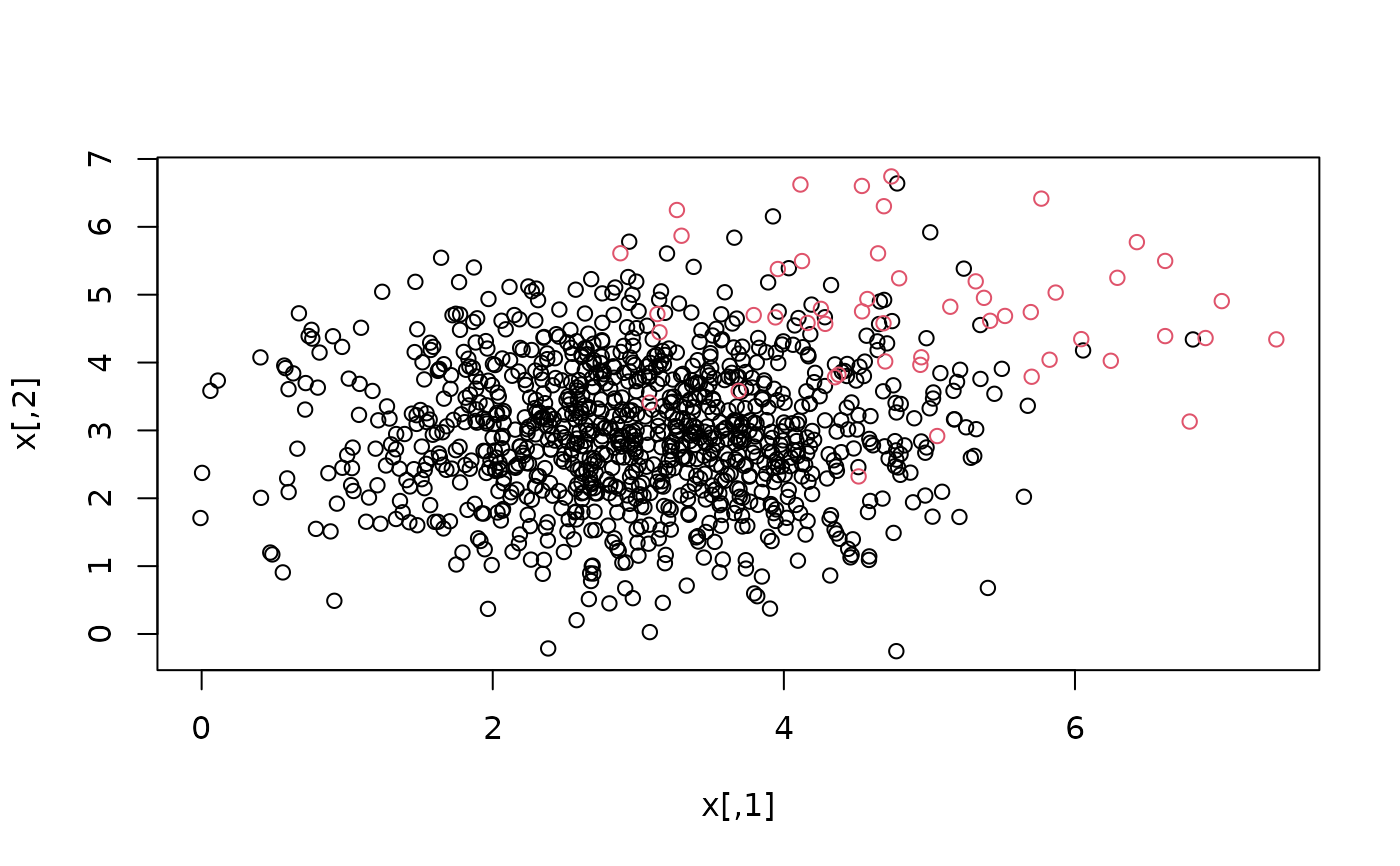
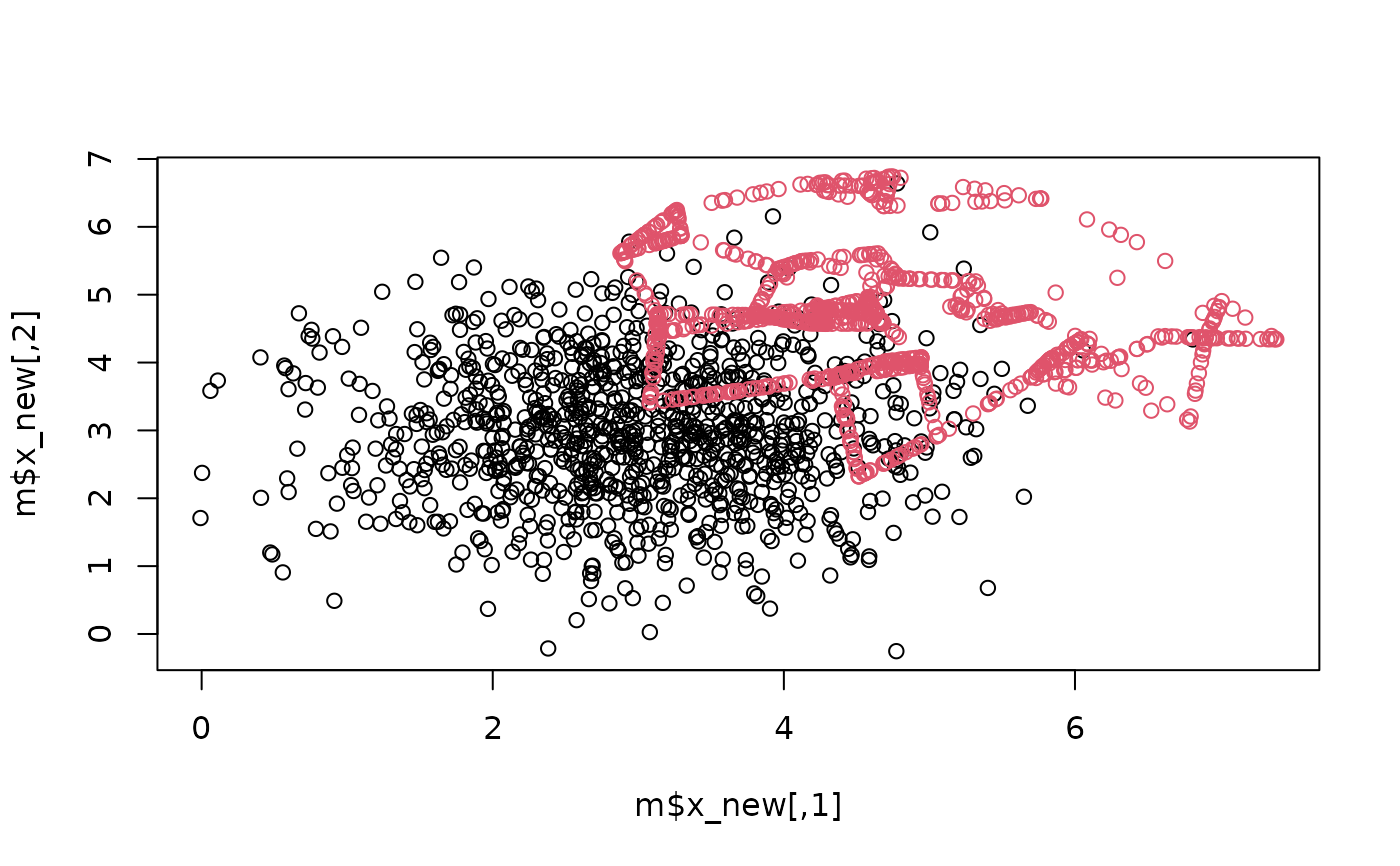
Adaptive Synthetic Sampling (ADASYN) is an extension of the Synthetic Minority Over-sampling Technique (SMOTE) algorithm, which is used to generate synthetic examples for the minority class (He et al., 2008). In contrast to SMOTE, ADASYN adaptively generates synthetic examples by focusing on the minority class examples that are harder to learn, meaning those examples that are closer to the decision boundary.
Can work with classes more than 2.