Borderline-SMOTE (BLSMOTE, 2005)
BLSMOTE.RdBLSMOTE() applies BLSMOTE (Borderline-SMOTE) which is a
variation of the SMOTE algorithm that generates synthetic samples only in the
vicinity of the borderline instances in imbalanced datasets.
Usage
BLSMOTE(x, y, k1 = 5, k2 = 5, type = c("type1", "type2"), ovRate = 1)Arguments
- x
feature matrix or data.frame.
- y
a factor class variable. Can have more than two classes.
- k1
number of neighbors to link. Default is 5.
- k2
number of neighbors to determine safe levels. Default is 5.
- type
"type1" or "type2". Default is "type1".
- ovRate
Oversampling rate. Class \(j\) receives
round(ovRate * (n_max - n_j))synthetic samples, wheren_maxis the size of the largest class (halves are rounded up). Default is 1 meaning full balance. A vector with one value per class is also accepted.
Value
a list with resampled dataset.
- x_new
Resampled feature matrix.
- y_new
Resampled target variable.
- x_syn
Generated synthetic data.
Details
Year: 2005.
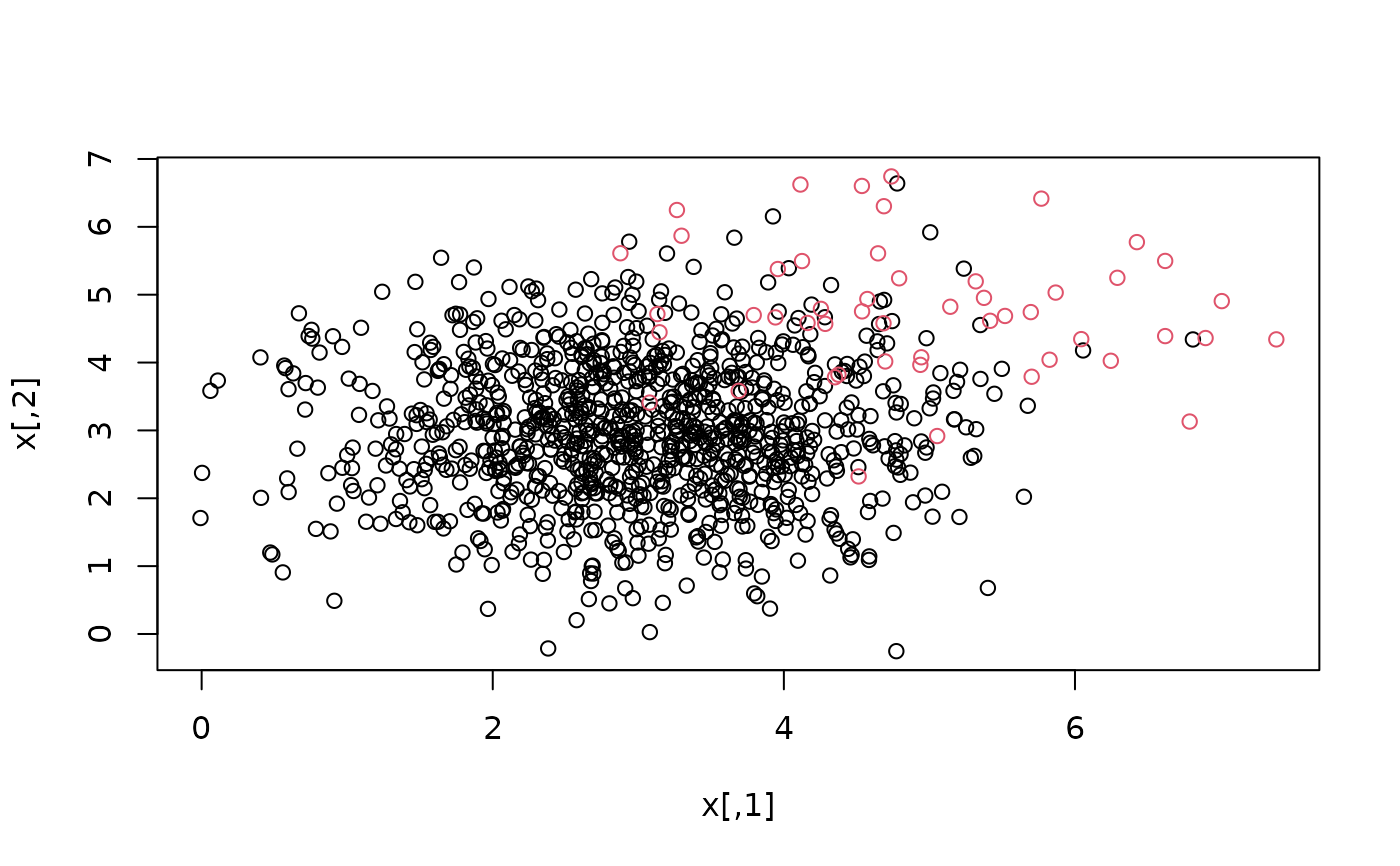
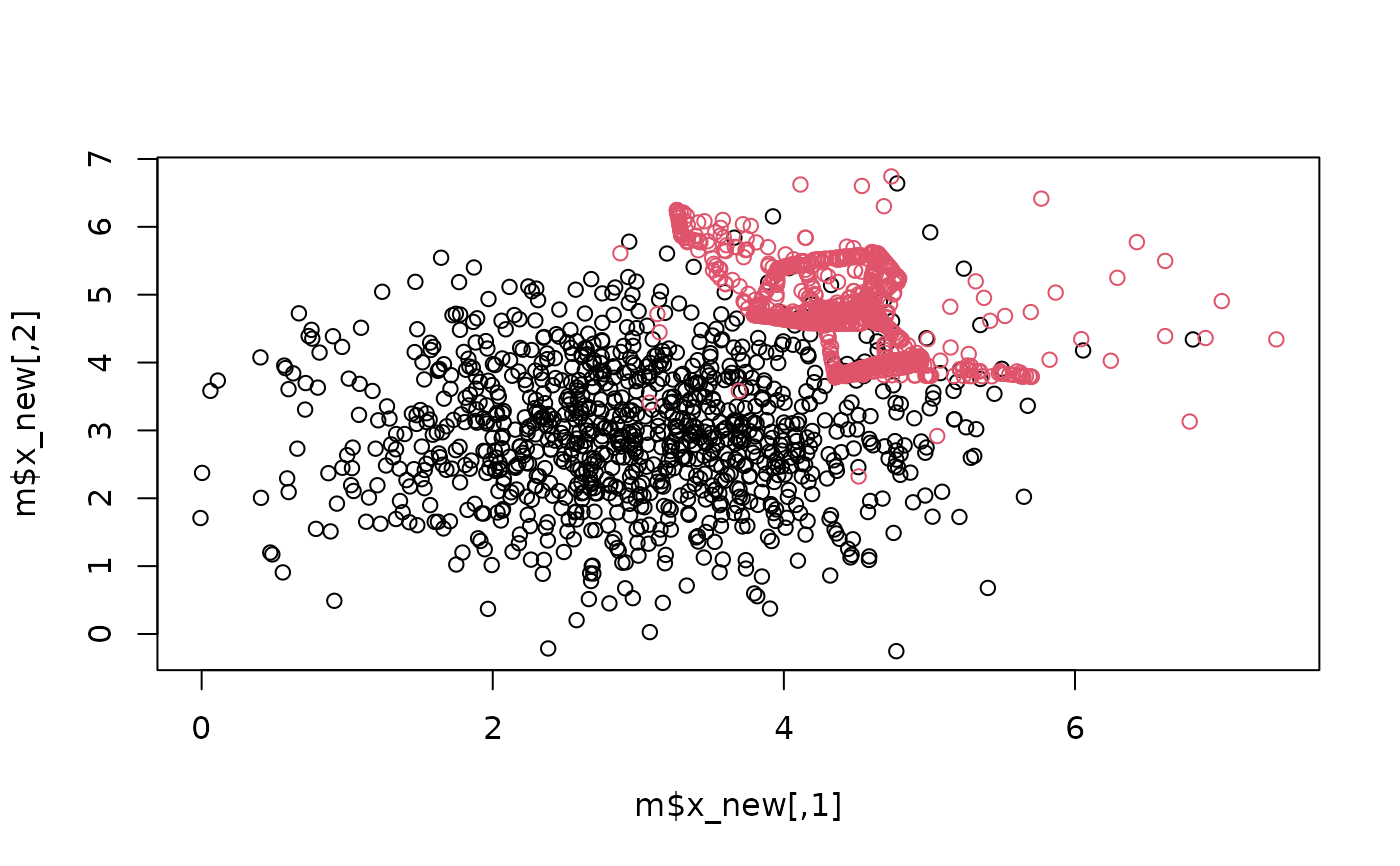
BLSMOTE works by focusing on the instances that are near the decision boundary between the minority and majority classes, known as borderline instances. These instances are more informative and potentially more challenging for classification, and thus generating synthetic samples in their vicinity can be more effective than generating them randomly.
Can work with classes more than 2.
References
Han, H., Wang, W. Y., & Mao, B. H. (2005). Borderline-SMOTE: a new over-sampling method in imbalanced data sets learning. In Advances in Intelligent Computing: International Conference on Intelligent Computing, ICIC 2005, Hefei, China, August 23-26, 2005, Proceedings, Part I 1 (pp. 878-887). Springer Berlin Heidelberg.