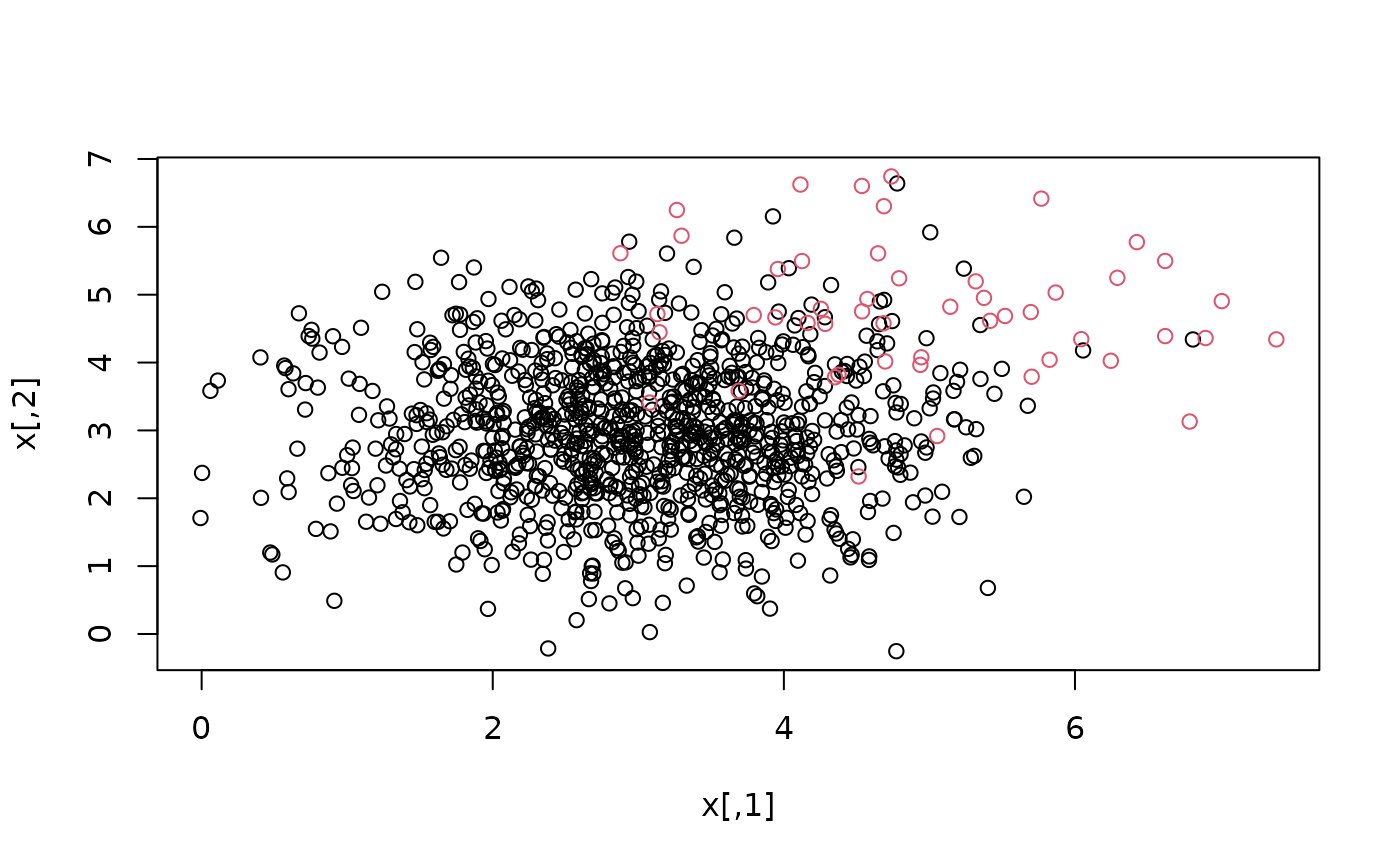
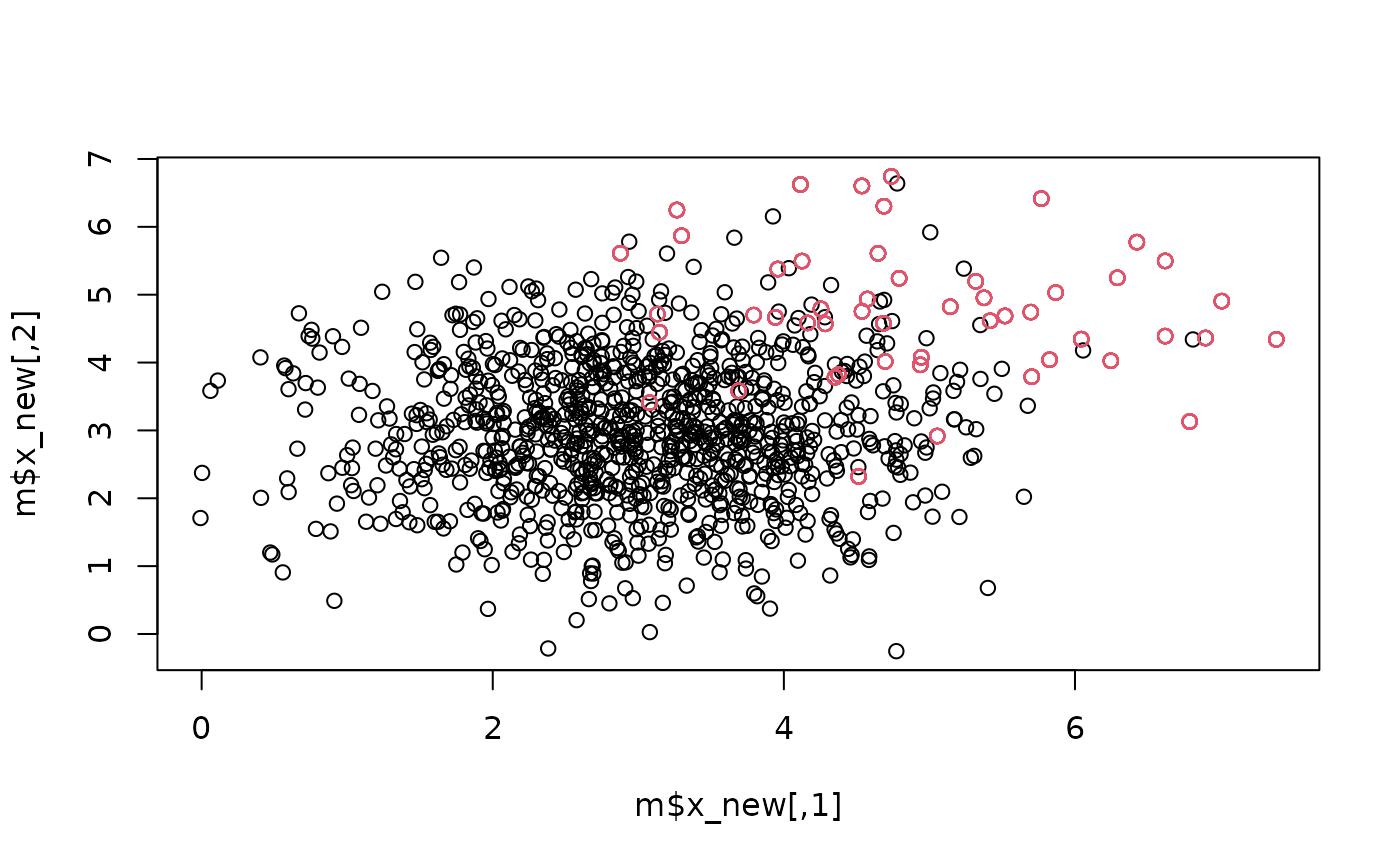
Random Oversampling (ROS)
ROS.RdResampling with ROS.
Arguments
- x
feature matrix.
- y
a factor class variable. Can have more than two classes.
- ovRate
Oversampling rate. Class \(j\) receives
round(ovRate * (n_max - n_j))synthetic samples, wheren_maxis the size of the largest class (halves are rounded up). Default is 1 meaning full balance. A vector with one value per class is also accepted.- ...
not used.
Value
a list with resampled dataset.
- x_new
Resampled feature matrix.
- y_new
Resampled target variable.